



THIRTY YEARS AGO, A SEMINAR DEVOTED ENTIRELY to Chianti Classico Gran Selezione would have been almost unimaginable. Chianti was still shaking off the lingering image of straw-covered fiasco bottles and inexpensive trattoria wine. Today, the region represents one of the most remarkable quality transformations in the world of fine wine.
“Of the world’s classic wine regions, perhaps none has experienced a quality trajectory like Chianti Classico,” Master Sommelier Bobby Stuckey told attendees during You Say Chianti Classico, I Say Sangiovese, a tasting at the 2026 Food & Wine Classic in Aspen, Colorado. Joined by Carlin Karr, one of America’s foremost experts on Sangiovese, Stuckey made a compelling case that Chianti Classico is entering its greatest era.
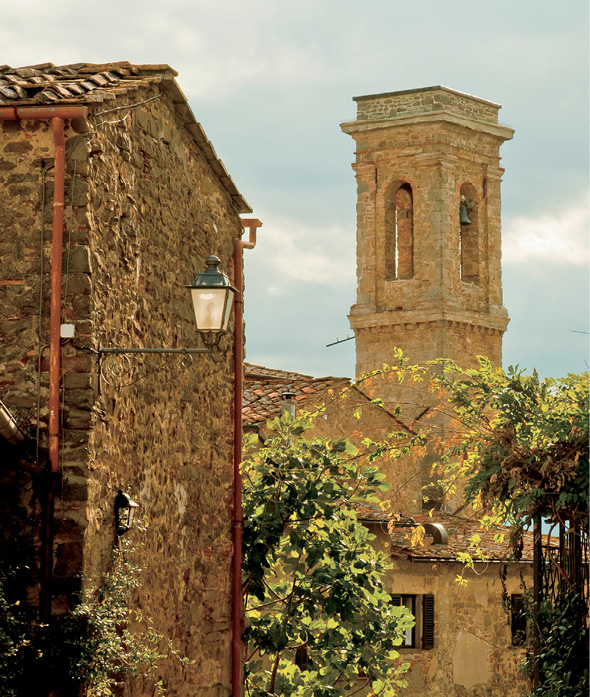
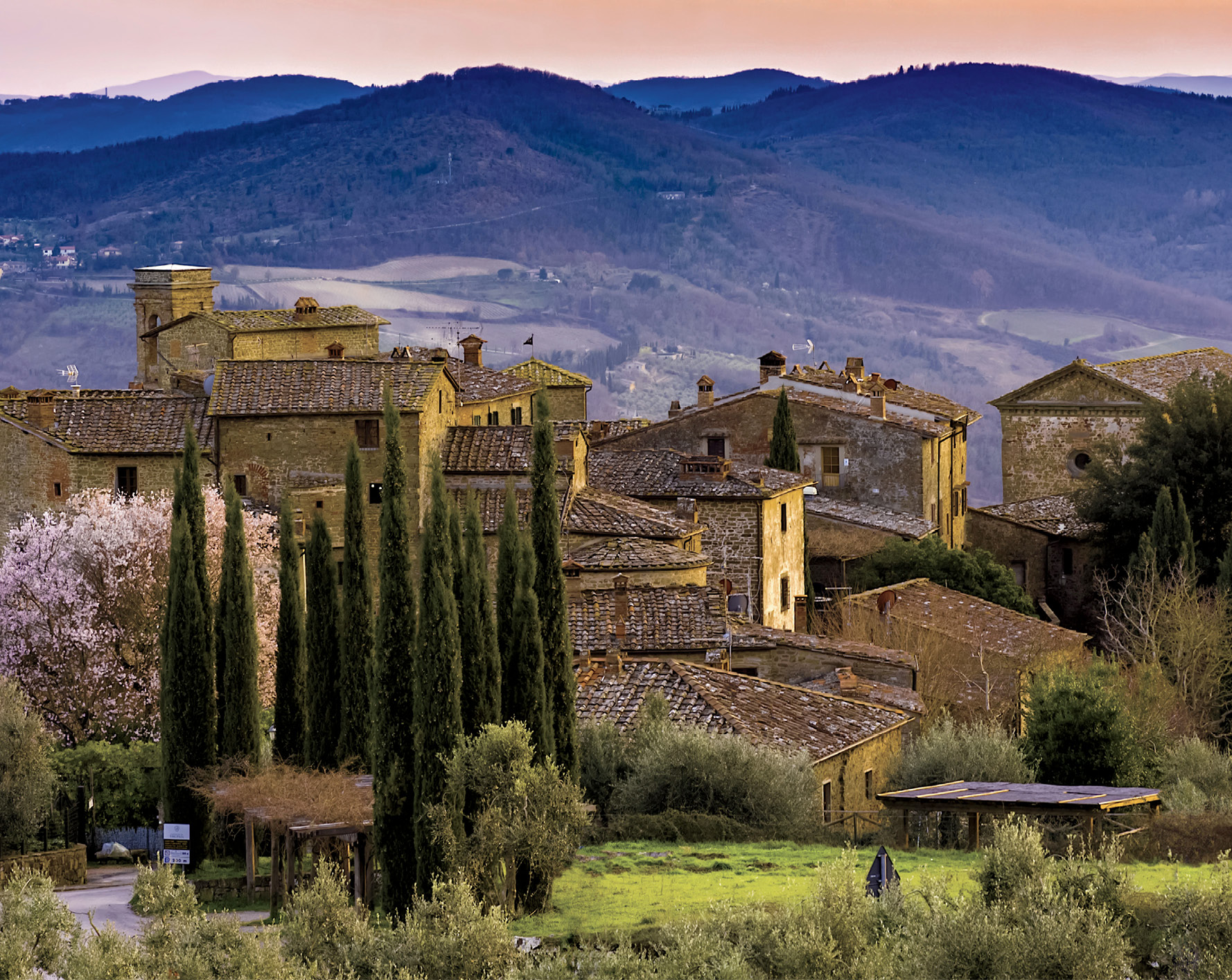
To understand that transformation, it helps to look beyond the glass. Chianti Classico is not simply a denomination or a style of wine but a living landscape of medieval villages, family estates, olive groves, castles, wooded lands and winding roads. The character of Sangiovese can change from one hillside to the next, and visitors can experience those differences within the course of a single day.
Nestled between Florence and Siena, Chianti Classico is the historic heart of Tuscan winemaking and the home of Sangiovese, one of Italy’s most celebrated red grapes. Officially recognized in 1716 by Grand Duke Cosimo III de’ Medici and easily identified by its iconic Black Rooster (Gallo Nero) seal, Chianti Classico is one of the world’s oldest protected wine regions. Not to be confused with the broader Chianti classification, Chianti Classico is its own appellation, occupying the original historic growing zone with stricter production standards and a focus on wines with a sense of place. Spanning just over 70,000 hectares, only about 10% of Chianti Classico is planted to DOCG vineyards. The remainder is preserved as forests, olive groves and natural habitat, representing one of Italy’s most biodiverse and beautiful wine landscapes.
That biodiversity, Stuckey argued, is one of the region’s greatest competitive advantages. The surrounding forests provide natural cooling, protect vineyards from pests, preserve water resources and foster a resilient ecosystem at a time when many wine regions face mounting pressures from climate change. “You can’t plant a forest later,” he observed. “Once it’s gone, it’s gone.”
Every bottle of Chianti Classico tells the story of Tuscany through a quality pyramid defined by progressively stricter standards for aging and vineyard selection, designed to showcase Sangiovese with increasing nuance. Annata wines, aged for a minimum of 12 months, capture the fresh berry personality of the grape. Riserva, aged at least 24 months, reveals greater depth and complexity. At the summit, Gran Selezione requires at least 30 months of aging, including three months in bottle, and must be produced from a minimum of 90% estate-grown Sangiovese.
Gran Selezione is also the only tier permitted to carry one of Chianti Classico’s 11 Additional Geographical Units, or UGAs, on the label. For Stuckey and Karr, it’s the quality advances at the top that herald a bright future for the whole area. Gran Selezione directs attention away from a single generalized idea of Chianti Classico and toward the striking personalities of individual villages and vineyards.
The northern villages—including San Casciano, Greve, Montefioralle and Lamole—are generally defined by cooler sites, higher elevations, floral aromatics and brisk acidity. The central heart of the denomination—Panzano, Radda, Gaiole and Castellina—combines forests, cooler elevations and fragrant Mediterranean macchia (scrubland) to produce some of Chianti Classico’s most nuanced expressions of Sangiovese.
Farther south, on the road to Siena, Vagliagli, Castelnuovo Berardenga and San Donato in Poggio transition to warmer conditions, clay-rich and terra-cotta-colored soils, and broader, more generous wines that retain the freshness and structure that define the denomination. These are not rigid stylistic formulas, but they offer travelers and wine lovers a new way to explore the many sides of Chianti Classico, by place of origin and by style.
Perhaps the greatest revelation of the Aspen tasting was how dramatically Sangiovese changes from one hillside to the next. At the highest elevations of the hamlet of Radda in Chianti, winemaker Angela Fronti’s “Vigna Istine” Gran Selezione showcased the ethereal side of Sangiovese. Grown at more than 1,800 feet on rocky limestone soils, the cool nights and long growing season allow Sangiovese to ripen slowly. Vigna Istine was bright and intensely mineral, with vibrant cherry fruit and mouthwatering acidity. Stuckey joked that great Sangiovese can be so finely woven and translucent that “you can read the local Gazette newspaper through the glass,” a reminder that this delicate grape often has more in common with Pinot Noir than Cabernet Sauvignon. Highlighting the differences between neighbors, Castello di Volpaia offered another aspect of Radda with its elegant yet powerful “Coltassala” Gran Selezione, layered with ripe red cherry and fresh oak.
For wine travelers, Radda offers a quintessential Chianti Classico road trip. The wine area is a pleasure to explore because its villages are linked by scenic secondary roads and separated by relatively short distances. The Chiantigiana (SR 222), the winding road connecting Florence and Siena through the heart of wine country, is one of Italy’s great wine drives. The route can be driven in a day, but doing so misses the point: Chianti Classico rewards slow travel.
On the drive to Radda, cypress-lined roads give way to vineyards and hilltop castles. Visitors can spend a day walking the medieval streets, tasting olive oil and Chianti Classico in historic cellars, enjoying a leisurely lunch overlooking the vineyards, and visiting estates such as Istine, Volpaia, Monteraponi and Val delle Corti at an unhurried pace. In the village of Volpaia an entire cottage industry has developed around the impeccably preserved 13th-century walled hamlet. Home to Castello di Volpaia, the renowned winery owned by the Mascheroni Stianti family since the 1960s, the medieval village has been thoughtfully restored, with fermentation tanks, barrel cellars and production spaces seamlessly integrated into centuries-old stone buildings. The result is a lively wine village that retains the charm of an open-air medieval hamlet, complete with a cooking school, tasting bars, osteria, bakery and boutique guesthouses tucked within its ancient walls.
Due west of Radda, Castellina in Chianti speaks with a slightly warmer Mediterranean accent. Tregole is a small, high-altitude estate in Castellina centered around the ancient Benvenuta vineyard, where old-vine Sangiovese slumbers under the watch of a centuries-old Etruscan tower. Winemaker Sophie Conte discovered her passion for wine just 15 years ago, transforming her family’s modest property into one of Chianti Classico’s rising stars. Today, she crafts elegant, site-driven expressions of 100% Sangiovese from estate vineyards at the highest elevations planted with 20- to 50-year-old vines. Castello di Tregole Chianti Classico Gran Selezione “Benvenuta” 2022 evokes one of the region’s signature scents: macchia, the wild Mediterranean vegetation that perfumes the hillsides with aromas of herbs, wildflowers and shrubs. Like so many of Chianti Classico’s youngest vintners, Conte welcomes visitors with genuine warmth and the wines to match, her broad smile reflecting the optimism of a new generation in Chianti Classico.
Midway between Florence and Siena in the heart of Chianti Classico, Panzano is based in the renowned Conca d’Oro, or “Golden Basin,” a natural amphitheater where abundant sunshine is tempered by cooling breezes, allowing grapes to achieve exceptional ripeness while preserving freshness. Fontodi, one of the village’s benchmark estates, finds a delicious balance between concentration and precision, at once savory and floral. Fontodi Gran Selezione “Vigna del Sorbo” unfolds with layers of dark cherry, violets, tobacco and savory herbs. Travelers looking to linger can stay nearby at the elegant Villa Le Barone or in one of the many agriturismi scattered among Panzano’s vineyards, an ideal base for exploring the southern reaches of Chianti Classico.
By the time our tasting reached Chianti Classico Gran Selezione “Rancia” 2021 from Fèlsina winery, the journey had taken us to the denomination’s southern frontier. The Fèlsina estate sits near Castelnuovo Berardenga, where the landscape shifts dramatically. Driving south from Radda, dense forests and the cool influence of the Apennines gradually give way to a warmer Mediterranean landscape that descends toward nearby Brunello di Montalcino and to low, sunbaked shrubs and dry macchia. The soils shift as well—from the rocky limestone of the northern villages to heavier clay, brick-colored earth and terra-cotta-rich soils. It’s a striking transition that you can see and taste in the wines. Rancia captured the evolution from north to south beautifully, offering a broader expression of Sangiovese with darker fruit, savory herbs and warming tones.
Throughout the tasting, the same message surfaced again and again. “Sangiovese makes you want food,” Karr said. “It makes you hungry. That’s the point of wine.” In the village of Panzano, legendary butcher Dario Cecchini drives the point home with his simple but delightful celebration of wine and food at the Tuscan table. One of Italy’s best-known culinary ambassadors, Cecchini has welcomed chefs, winemakers and food lovers from around the world to his family butcher shop for decades, earning an international following through his passionate advocacy for Tuscan cuisine and appearances on Netflix’s Chef’s Table.
Equal parts butcher, storyteller and host, Cecchini coined the phrase carne diem—a joyful reminder to savor good food, generous hospitality and the present moment. At his famed Officina della Bistecca restaurant, guests are greeted in the butcher shop with a glass of Chianti, bread, olive oil, house-made salumi, cheeses and decadent Chianti butter (a whipped pork-fat spread flavored with wine and spices) before heading upstairs. Everyone sits together at long shared tables for the family-style meal. Bistecca alla Fiorentina is grilled over an open flame, pappardelle pasta is tossed with slow-braised wild boar ragù and bowls of ribollita arrive drizzled with newly pressed olive oil. Naturally, every course is paired with a generous pour of Chianti Classico.
Chianti Classico, Stuckey concluded at the end of our tasting, is one of wine’s great discoveries hiding in plain sight. There is no single expression of Chianti Classico; instead, there is a mosaic of villages and people united by Sangiovese and a love of the land. I’m already planning my next trip along the Chiantigiana. *
Helen Gregory has been writing about the good life for over 20 years. Fluent in four languages, she has lived in Italy, India, France, Morocco and South America, and derives inspiration from her love of travel and the many people she has met along the way. An accomplished business owner, Helen shares her life with her husband, Brian, three kids and two dogs.




TASTINGS
TREGOLE CHIANTI CLASSICO
GRAN SELEZIONE 2022 ($60)
100% Sangiovese from a high-altitude vineyard in Castellina. Fragrant and dense with a medley of wild violets, rose petals, red fruits and the heady scents of Mediterranean macchia.

FONTODI CHIANTI CLASSICO 2022 ($55)
100% Sangiovese Conca d’Oro vineyard in Tuscany’s heart. Ripe cherry, wild berries and plum mingle with hints of violet, dried herbs and leather. Bright acidity.

CASTELLO DI VOLPAIA CHIANTI CLASSICO GRAN SELEZIONE “COLTASSALA” 2021 ($90)
100% Sangiovese from Radda in Chianti. Powerful but elegant, with ripe red cherry, violets and baking spice. Fresh acidity frames a round finish with notes of black cherry, violets, mountain herbs and subtle spice.
