
OVER the last quarter of a century, Robert J. Calcagno has been hailed as “America’s French Impressionist,” producing work that blends American creativity with the French traditions of impressionism. The self-taught artist’s style is largely reminiscent of Caillebotte in its nod to realism, though he cannot resist elements of various forebearers’ styles: the open edge favored by Degas, the atmospheric impressions created by Monet’s brushstrokes, and the loose, undefined figures of Pissarro.
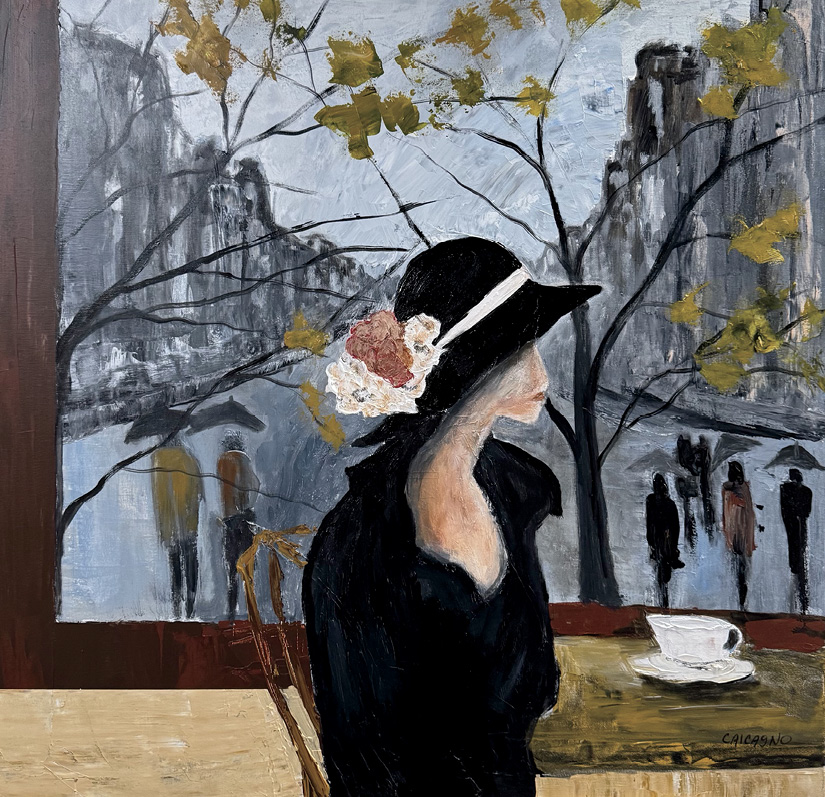
These influences come together in Calcagno’s Girl in the Window, a piece that grants viewers a great deal of freedom of interpretation while inviting them into the story. “Why only one cup on the table—is she alone? Why is she not looking out the window?” Calcagno poses, opening the dialogue.
The magic lies in Calcagno’s creation of so much mystery in what seems a simple painting. The Parisian buildings, the trees, the mood, the background figures, the open edge of the composition—all offer only an idea, a notion of who she is, where she is and when. “Caillebotte would probably find comfort in the detail of the hat and cup,” Calcagno notes. “Two objects dominate your attention, leaving the rest to your own impression.”
Calcagno’s works, which grace galleries across the United States, have also appeared on numerous television shows.