
SARAH-HAMLIN HASTINGS WAS STANDING IN HER NEWLY PURCHASED CHARLESTON HOUSE, at bare walls, when she realized she had very limited local options for what to put on them. She had just moved home from New York, where she’d cut her teeth at Elle Décor and the design firm Cullman & Kravis, surrounded by more fabric houses and wallpaper studios than she could ever need. Charleston had none of those choices. What it had was the same handful of retail sources everyone in town was already pulling from, and a kind of quiet resignation that this was simply how it worked here.
Instead of resigning herself to it, she decided to be the change.
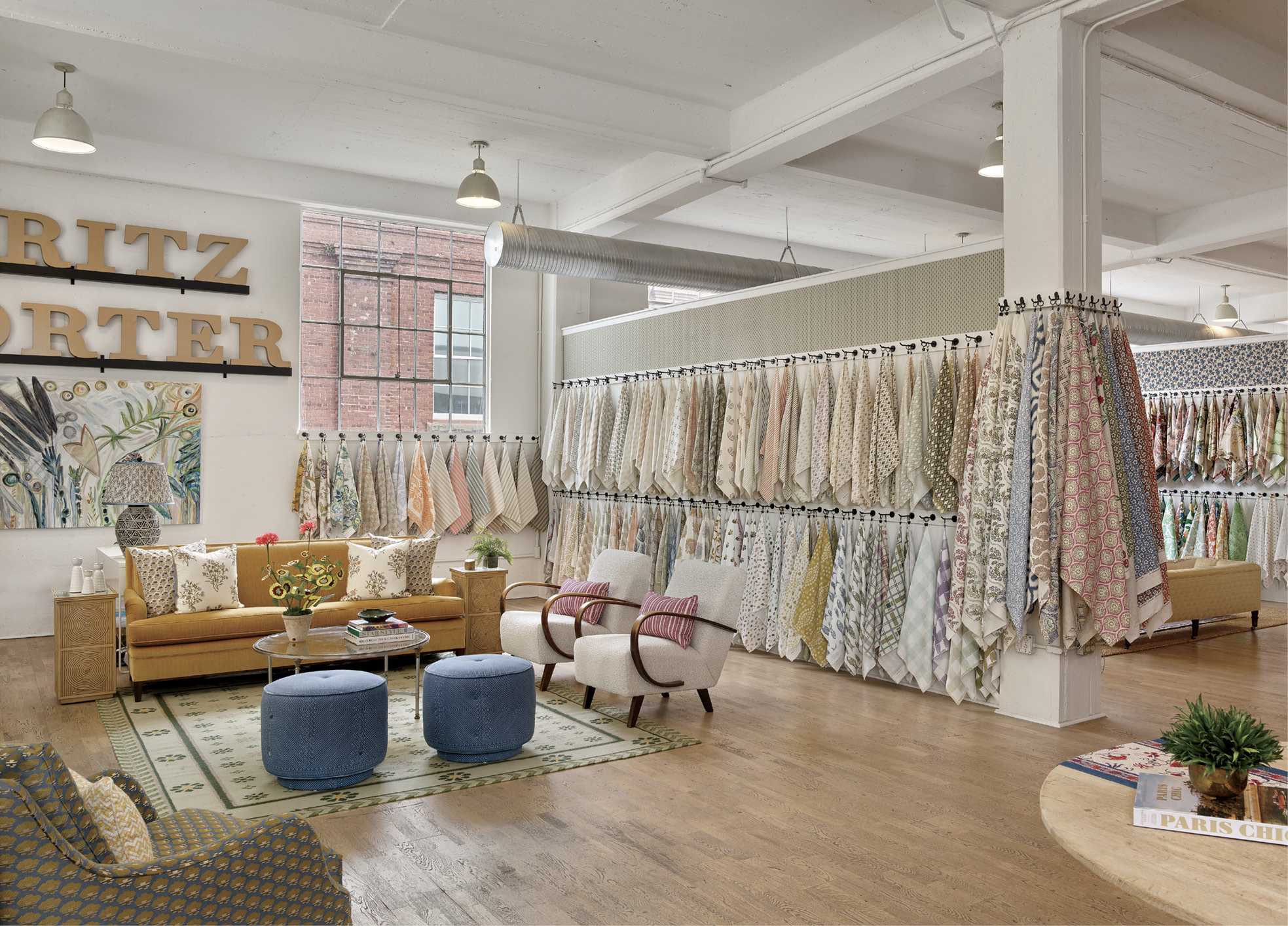
That single, bold idea eventually became Fritz Porter Design Collective, the trade-only design resource and full-service interior design firm now anchored in Charleston’s Navy Yard. What started as one designer’s hunt for something more interesting for her own home has grown into one of the most closely watched sources for artisanal textiles, wallpaper and custom furnishings in the Southeast—and a place where designers from all over the region now build a stop into their travel plans.
Hastings grew up in Charleston before her stretch in New York, so the move home wasn’t a leap into the unknown so much as a return with fresh eyes. Decorating her own house was the first time two versions of her hometown collided: the one she remembered and the one that suddenly felt limited compared to what she’d left behind.
“I wondered where the design sources were,” she says. “I felt like we should have something here, and I thought maybe I could bring it.”
Hastings started calling the brands she admired from her New York days, only to be told, again and again, that those territories already belonged to Atlanta showrooms. Rather than take that as a dead end, she treated it as a starting point. She began hunting for the brands that showrooms in Atlanta had yet to find, picking up the smaller, less obvious names doing extraordinary work in textiles and wallpaper but without the marketing muscle to be found elsewhere.
“It was a happy accident that I found these smaller boutique brands who were doing beautiful textiles and wallpaper,” Hastings says.
To keep the lights on in those early days, she subleased space to antiques dealers, a practical solution that also gave the fledgling shop, then housed in Charleston’s Cigar Factory, a certain lived-in charm. It worked, in the sense that people loved wandering through it. But it also created what Hastings remembers as a bit of an identity crisis. Customers adored the store without quite knowing what to call it. Was it a boutique? An antiques mall? A design resource? Nobody, including Hastings, had fully decided.
The answer arrived, as these things often do, with a lease expiration. When the Cigar Factory space came up for renewal, Hastings faced a real fork in the road: stay retail and open to the public or commit fully to the trade and work exclusively with designers. She chose the latter, and in 2023, Fritz Porter reopened in the new Charleston Design District at the Navy Yard as a trade-only showroom.
It was the right call. Retail has become an unforgiving business in the age of online shopping, and pretending otherwise would have meant fighting a battle that wasn’t hers to win. The trade model let her lean into what the showroom does well: curation, relationships and depth rather than volume.
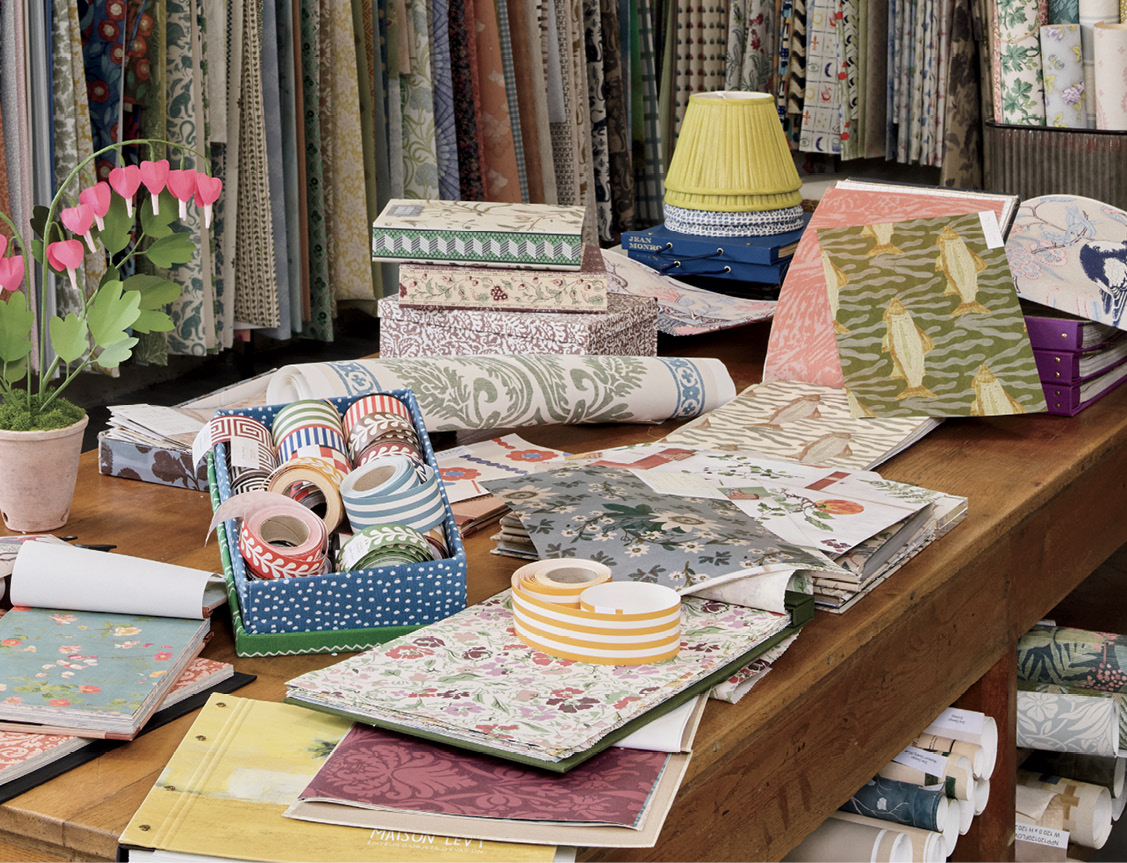
What Fritz Porter offers that a larger showroom cannot has less to do with pricing sheets than with philosophy. Hastings set out to build a resource that would spare Charleston designers the drive to Atlanta, yes, but more than that, she wanted a place that genuinely celebrated craftsmanship—the kind that happens one bolt of fabric at a time rather than on an industrial production line.
“There’s a place for big brands, but they’re also doing big projects, like hospitality,” she says. “My vendors are hand-screening things one at a time. It’s like we are a gallery for an emerging artist. We’re telling their stories, their process, their inspiration.”
That storytelling impulse eventually outgrew the showroom floor entirely, which is how Once Upon a Design, Hastings’ podcast, came to be. It is difficult to stop a designer mid-shop and walk them through the history behind a particular pattern, she admits, but a commute or a road trip is a different kind of moment, one where people have the patience to listen. The podcast digs into the artisans behind the brands and the designers who champion them, and in doing so it does something a showroom wall never quite could: It slows people down long enough to understand why a piece matters.
Behind that curation sits Becky LaRoche, the collective’s textile director. Vendors send in boxes of samples regularly, and LaRoche goes through every one of them by hand, no shortcuts. She gets on the phone with the makers themselves. Whether a brand ultimately earns a place at Fritz Porter or not, LaRoche always gives them honest, specific feedback—the kind some vendors take back to the studio, then return with something stronger.
The result of that scrutiny is a collection that stays intentionally small. Fritz Porter currently carries just 34 lines, a number Hastings has no interest in expanding for its own sake. “We don’t really want any more because we never want our lines to cannibalize each other. Each one has its own point of view and brings a fresh take to our offerings,” she says.
Charleston’s identity is tightly bound up with historic preservation, and Hastings does not treat that as an obstacle to modern design so much as a framework for design. She has worked closely with the Historic Charleston Foundation, an organization near and dear to her. She speaks about its mission with genuine respect. Charleston, she is quick to note, isn’t a museum. It is a living city that people fight to keep beautiful because they love it, not because a committee insists.
Her role is partly translation. Preservation guidelines can feel restrictive to a new homeowner eager to renovate in the Historic District. Hastings spends real time explaining that the people enforcing those rules aren’t being difficult for sport. “They really love this city and want to preserve the character,” she says. “We all understand you cannot live in the past, but when renovating, there needs to be a respect for history, and these homes should continue to look like they belong in Charleston.” The showroom leans into that with an educational bent, helping clients understand not just what they can do to a historic property but why certain choices honor the place they chose to live.
For all the structure Fritz Porter has built, from a dedicated interior design project manager to a procurement team to a growing custom furniture program led by Jordan Hoffman, Hasting’s own approach to design remains stubbornly personal. Ask her about a design rule she loves breaking, and she doesn’t hesitate: She wants her projects to feel very personal to her clients. She wants clients to use their grandmother’s table in the dining room. She wants the kids’ input in picking paint colors for their own bedrooms. She welcomes clients’ collections, however quirky. Ownership, she believes, is what makes a house feel like a home rather than a showroom itself, and her job is simply to guide that instinct gently rather than override it.
Beyond Charleston, Hastings still looks to New York for inspiration, the city where her design roots took hold. It is also, she notes, one of the last places where traditional craftsmanship still has a real foothold, even as those skills fade elsewhere. Fritz Porter isn’t simply a place for designers to shop anymore. It’s a mission to ensure the people doing this painstaking, handmade work don’t disappear along with the industries that once supported them.
For Charleston’s design community, and beyond, that mission has produced something increasingly rare: a source of rooms that actually look like the people living in them, built from the hands of makers most of the design world has never heard of and likely never will, unless a business like Fritz Porter keeps insisting they should. *
Robin Howard is a freelance writer in Charleston. See more of her work at robinhowardwrites.com.